
About Rani Lakshmi Bai
Birth & Childhood
Early life, family background and physical training that shaped Manikarnika Tambe
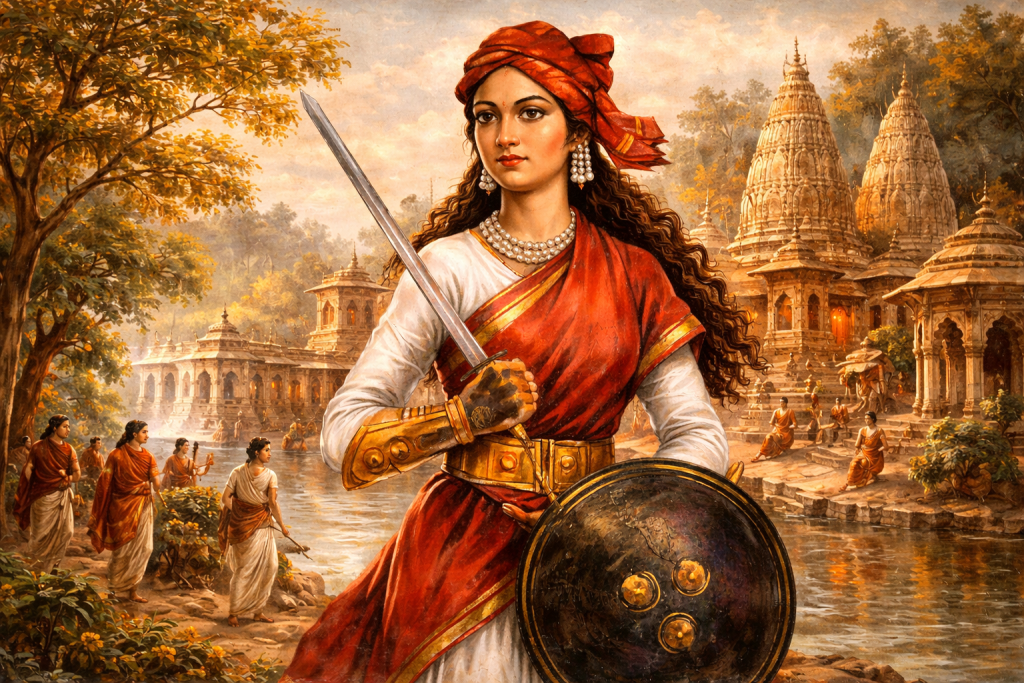
Birth Name: Manikarnika Tambe
Known affectionately as Manu, she was born on 19 November 1828 in Varanasi. Her childhood combined the learned, devotional atmosphere of Varanasi with the practical, spirited training that later defined her public life.
Family, Culture & Early Education
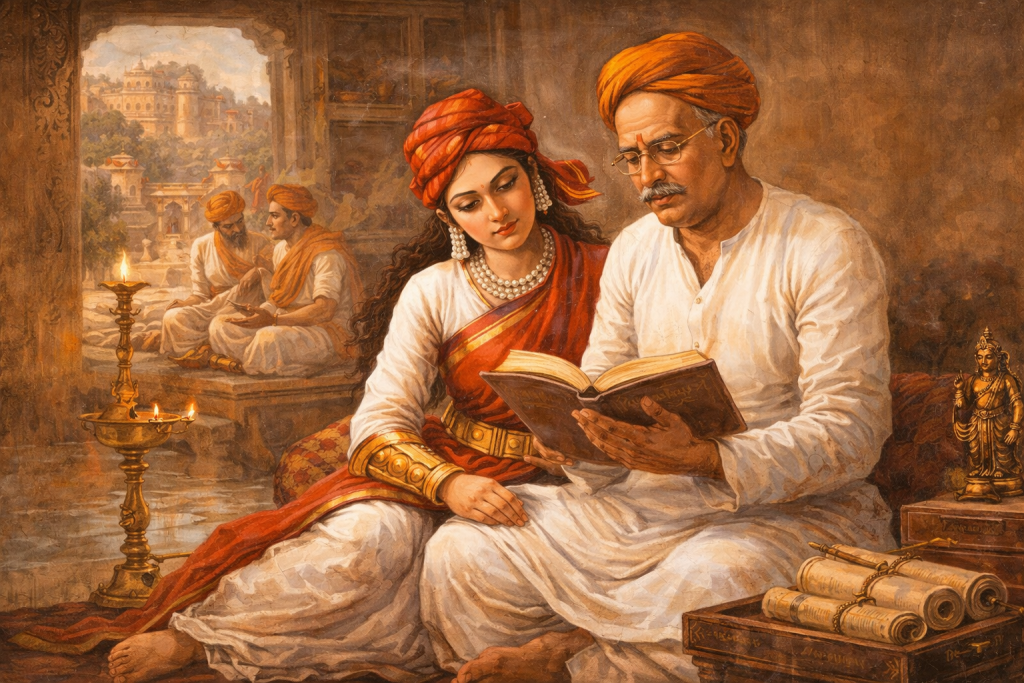
Manikarnika was raised in a Marathi Brahmin household. Her father, Moropant Tambe, was associated with administrative circles which exposed her to political discussion and civic life. The family valued learning — she was taught reading, writing, stories from the epics, and gained an early understanding of governance and duty.
- Early lessons in Sanskrit literature and dharma stories
- Informal exposure to politics and administration at home
- A household culture that encouraged courage and curiosity
Physical Training & Martial Arts
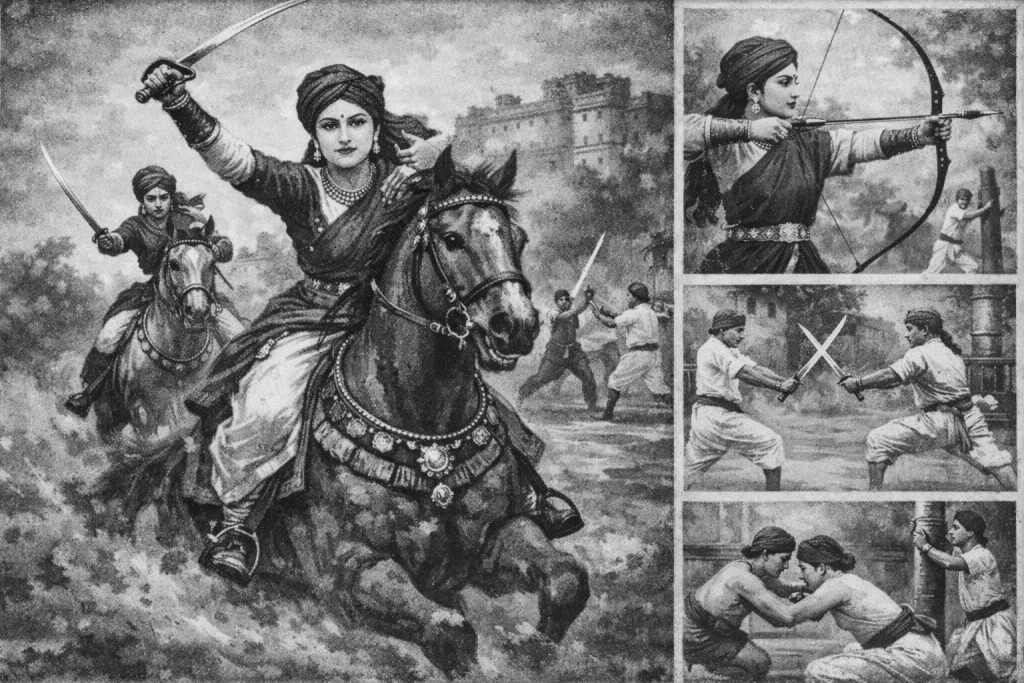
Manikarnika trained alongside boys in a range of physical disciplines — horse riding, archery, swordsmanship and wrestling drills. This early, rigorous training gave her exceptional agility, endurance and tactical confidence.
Key skills: Horse riding · Archery · Sword fighting · Mallakhamb & wrestling
Marriage to Raja Gangadhar Rao
The royal transformation of Manikarnika into Rani Lakshmi Bai
-
1842 — Marriage to Raja Gangadhar Rao
Manikarnika Tambe became Rani Lakshmi Bai, beginning her life as queen of Jhansi. -
1851 — Adoption of Damodar Rao
The royal couple adopted Anand Rao following the tragic loss of their biological son. -
1853 — King’s Death
Rani Lakshmi Bai assumed leadership, safeguarding Jhansi’s sovereignty despite British obstruction.
Political Situation in Jhansi
Jhansi faced increasing British influence under the Doctrine of Lapse. Political tension grew as leadership transitions were closely monitored and administrative pressure mounted on the royal family.
Royal Court Life
As queen, Lakshmi Bai was deeply involved in court matters — from administration to military discussions. She was respected for her intellect, discipline, and commitment to Jhansi’s welfare.
Adoption of Damodar Rao
With no surviving biological heir, the couple adopted Anand Rao — renamed Damodar Rao — as the legal successor. The British, however, refused to recognize the adoption, triggering political disputes.
Leadership Role After King’s Death
After Raja Gangadhar Rao’s death, Lakshmi Bai emerged as the central authority of Jhansi. Strong-willed and fearless, she defended the kingdom against annexation attempts with unmatched courage.
Personal Traits
- Early lessonsBrave and decisive in crisis in Sanskrit literature and dharma stories
- Disciplined and dedicated to training
- Empathetic toward her soldiers and citizens
- Strategic thinker with strong political insight
- Calm and poised even during conflict
Courage
Rani Lakshmi Bai’s courage was legendary. She led from the front, riding into battle with unmatched fearlessness and moral conviction. Her bravery inspired generations of freedom fighters.
Sense of Duty
Her loyalty and responsibility towards Jhansi were unwavering. She stood firm against injustice, guided by principles of service, justice, and duty to her people.
Women Leadership Role Model
Rani Lakshmi Bai broke societal barriers and led as a warrior-queen, administrator, strategist, and symbol of women's empowerment. Her legacy continues to guide women leaders worldwide.
Quotes, Anecdotes & Traits
From bold declarations to personal stories of grace and leadership, Lakshmi Bai’s qualities reflected strength, empathy, intelligence, and indomitable spirit.