
Jhansi: The Kingdom & Its History
Geography & Governance of Jhansi
An overview of Jhansi’s natural landscape, administrative structure & historical significance.
Geography of Jhansi
Jhansi lies in the Bundelkhand region, marked by rocky plateaus, dry forests, and the flow of the Betwa and Pahuj rivers. Its terrain historically served as a natural defense, shaping its strategic importance in North India.
- Located at the crossroads of UP & MP
- Granite hills & semi–arid climate
- Seasonal rivers shaping agriculture
- Natural fortification advantage
Historical Governance
Jhansi’s governance evolved across major eras — from Maratha rule to British administration. The Jhansi Fort served as the administrative core, especially during the reign of Rani Lakshmi Bai.
- Royal governance centered around fort
- British Colonial District HQ
- Royal governance centered around fort
Modern-Day Governance
Today Jhansi operates under a structured district administration with a Municipal Corporation overseeing urban development, heritage conservation, tourism, and civic infrastructure.
- Jhansi Municipal Corporation
- District Collector & DM Office
- Tourism & Archaeology Departments
- Urban planning & development authorities
Pre-1857 Political Environment
The political backdrop that shaped Jhansi before the First War of Independence.
Maratha Rule & Local Governance
Before 1857, Jhansi was a Maratha stronghold governed by local nobles and warrior clans with a disciplined administrative system.
- Strong influence of Maratha leadership
- Regional alliances & military culture
- Traditional land & revenue structures
British Expansion & Control
With British expansion, political agents began intervening in Jhansi’s internal affairs, reducing royal autonomy.
- Treaties reshaping territory
- Administrative interference
- Pressure on local governance
Doctrine of Lapse & Adoption Issues
The British refusal to accept adopted heirs destabilized Jhansi’s royal succession, directly challenging its sovereignty.
- Rejection of Damodar Rao’s adoption
- Rising tension with British authorities
- Political instability & mistrust
Growing Discontent
High taxes, loss of rights, and disrespect towards native traditions created frustration among nobles, soldiers, and citizens.
Rise of National Consciousness
The period saw early sparks of resistance. Leaders like Rani Lakshmi Bai emerged as voices against unjust colonial rule.
The Doctrine of Lapse
British annexation policy and why Jhansi became a primary target.
📘 British Policy Explanation
The Doctrine of Lapse, introduced by Lord Dalhousie, allowed the British East India Company to annex any princely state where the ruler died without a biological male heir.
- Adopted heirs were not recognized
- Traditional Indian succession laws ignored
- Became a major tool for British expansion
🎯 Why Jhansi Was Targeted
After the death of Raja Gangadhar Rao, the British rejected the adoption of Damodar Rao, declaring that Jhansi “lapsed” under the doctrine.
- Adopted heir Damodar Rao not accepted
- Rani Lakshmi Bai denied the throne
- Jhansi forcibly annexed in 1854
- This injustice fueled Rani Lakshmi Bai’s resistance
Administrative Reforms & Jhansi Map
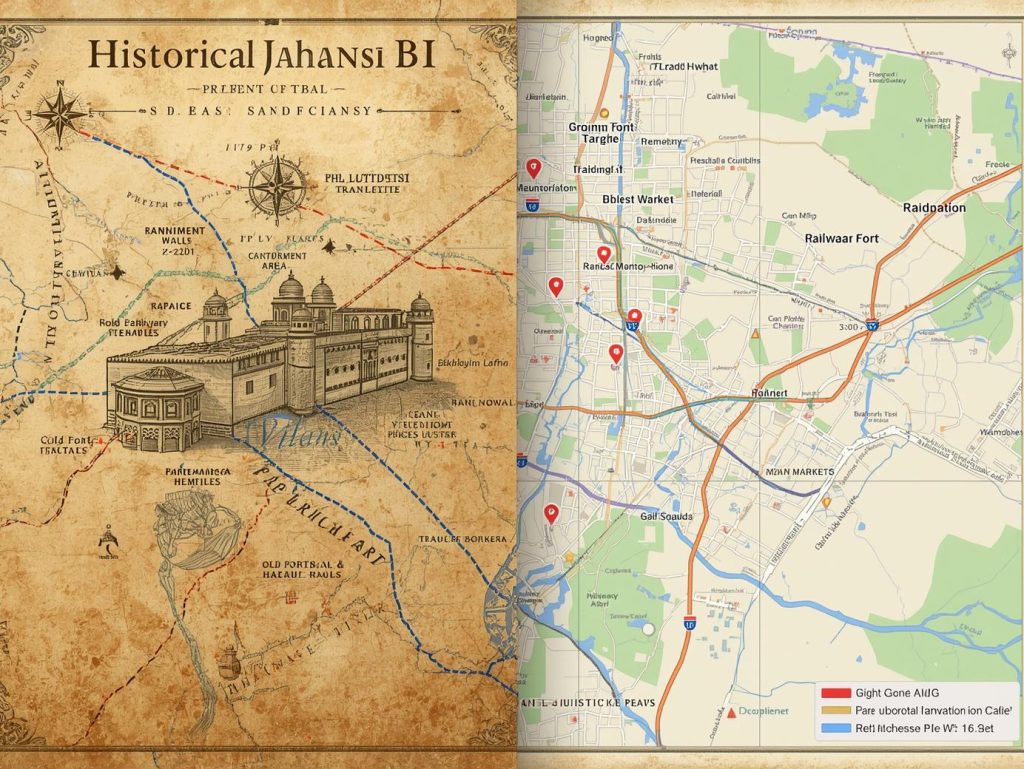
Administrative Reforms by Rani Lakshmi Bai
- Efficient Revenue System: Fair taxation and removal of corrupt intermediaries.
- Strengthened Local Defence: Women warriors, civilian forces, and fort upgrades.
- Judicial Reforms: Transparent dispute resolution to protect common citizens.
- Infrastructure Growth: Roads, water systems, and trade-route development.
- Public Welfare: Support for artisans, learning, and civic safety.