
The Indian Rebellion of 1857
Indian Rebellion of 1857
A simplified, modern dark-mode design for educational or museum-style content pages.
Overview
The Indian Rebellion of 1857 marked a turning point in the subcontinent's colonial history. What began as a sepoy mutiny in Meerut transformed into a widespread uprising involving rulers, soldiers, civilians and peasants — ultimately ending the East India Company's rule.
Causes
- Military discontent and unequal treatment of Indian sepoys.
- Political annexations under the Doctrine of Lapse.
- Religious fears over new rifle cartridges.
- Heavy revenue demands on farmers.
- Growing resentment of Company rule.
Timeline
-
10 May 1857 — Meerut
Sepoys revolt and march to Delhi. -
June 1857 — Delhi
Rebels capture Delhi; Bahadur Shah Zafar becomes symbolic leader. -
1857 — Kanpur & Lucknow
Key battles and sieges under Nana Sahib and Begum Hazrat Mahal. -
March 1858 — Jhansi
Rani Lakshmi Bai leads heroic defence of Jhansi. -
1858 — Aftermath
British Crown takes over India after the fall of major centres.
Key Figures
Rani Lakshmi Bai
Queen of Jhansi and a central symbol of resistance.
Bahadur Shah Zafar
Last Mughal emperor; figurehead of the revolt.
Nana Sahib
Leader of Kanpur uprising.
Tantia Tope
Master strategist and guerrilla commander.
Aftermath
The revolt reshaped British policy, ending the Company’s rule and placing India directly under the British Crown. It inspired later nationalist movements and remains a foundational chapter in India’s freedom struggle.
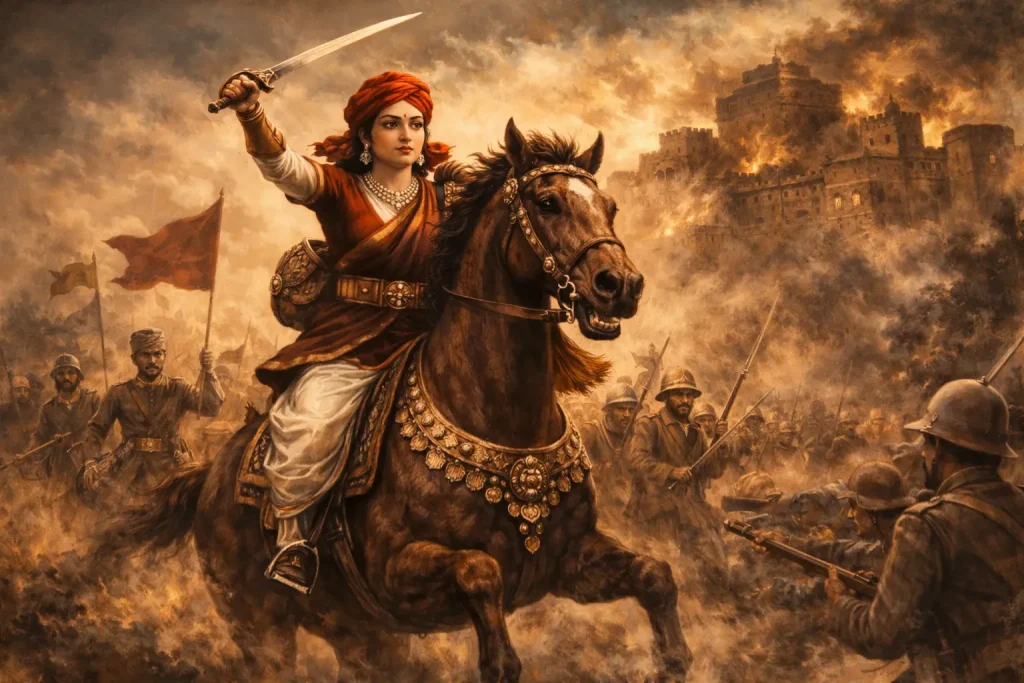
Lakshmi Bai’s Role as Commander
Rani Lakshmi Bai transformed into a fearless commander during the 1857 Rebellion, leading troops with unmatched courage and strategic brilliance. She trained battalions, fortified Jhansi, and personally led cavalry charges that became legendary in India’s history.
- Military Training & Discipline – Led male and female combat units.
- Defense of Jhansi Fort – Managed cannons, battlements & strategy.
- Battlefield Strategy – Expert in cavalry charges & rapid movement.
- Motivational Leadership – Inspired troops through personal bravery.
- Alliances & Unity – Collaborated with Tatya Tope and rebel leaders.
Defense of Jhansi Fort
Rani Lakshmi Bai transformed Jhansi Fort into a symbol of resistance in 1857. Against overwhelming odds, she organized troops, fortified battlements, and coordinated military operations with tactical brilliance.
⚔️ War Strategy
- Cannon placements on bastions
- Internal troop corridors
- High-tower surveillance
- Rapid cavalry counter-attacks
🛡️ Defenders & Allies
- Female battalion under Jhalkari Bai
- Regular army units
- Civilian volunteers
- Rebel support from Tatya Tope
- Village militias aiding supplies
🔥 Armory & Operations
- Cannons, muskets & swords
- Weapon repair workshops
- Gunpowder & ammo stockpiles
- Patrol & ration teams
- Signal torches & escape routes
Battle of Jhansi (1858)
The Battle of Jhansi in 1858 was a defining moment in the Indian Rebellion. Rani Lakshmi Bai’s leadership was tested as the British forces besieged her fort. Despite overwhelming odds, her tactical brilliance, courage, and the support of her army made this battle legendary.
🏹 British Siege Strategy
- Heavy artillery bombardment to weaken fort walls
- Blockade of supply routes to starve defenders
- Coordinated attacks by multiple regiments
- Psychological warfare to demoralize troops
- Night attacks and surprise raids
⏳ Key War Timeline
- March 1858 – British forces approach Jhansi
- April 1858 – Siege begins; bombardment of outer walls
- May 1858 – Rani Lakshmi Bai leads multiple sorties
- June 1858 – British breach inner defenses
- Late June 1858 – Fall of Jhansi, heroic escape by Rani
👁️ Eyewitness Accounts
- Queen leading cavalry charges with her son tied to her back
- Soldiers described defenders as disciplined and courageous
- British records highlight strategic retreats and counter-attacks
- Stories emphasize her determination and inspiring speeches
Escape to Kalpi
Night Escape from Fort
Under the cover of darkness, Rani Lakshmi Bai executed a daring night escape from Jhansi Fort. With stealth and strategy, she led her troops through secret passages, avoiding British surveillance.
- Stealthy night departure
- Careful troop coordination
- Use of hidden routes and disguises
Alliance with Tatya Tope
Upon reaching Kalpi, Rani Lakshmi Bai allied with the legendary general Tatya Tope. Together, they strategized to continue the fight against British forces, forming one of the strongest resistance fronts of the 1857 Rebellion.
- Strategic planning with Tatya Tope
- Combined forces against British troops
- Reinforcement of morale for local soldiers
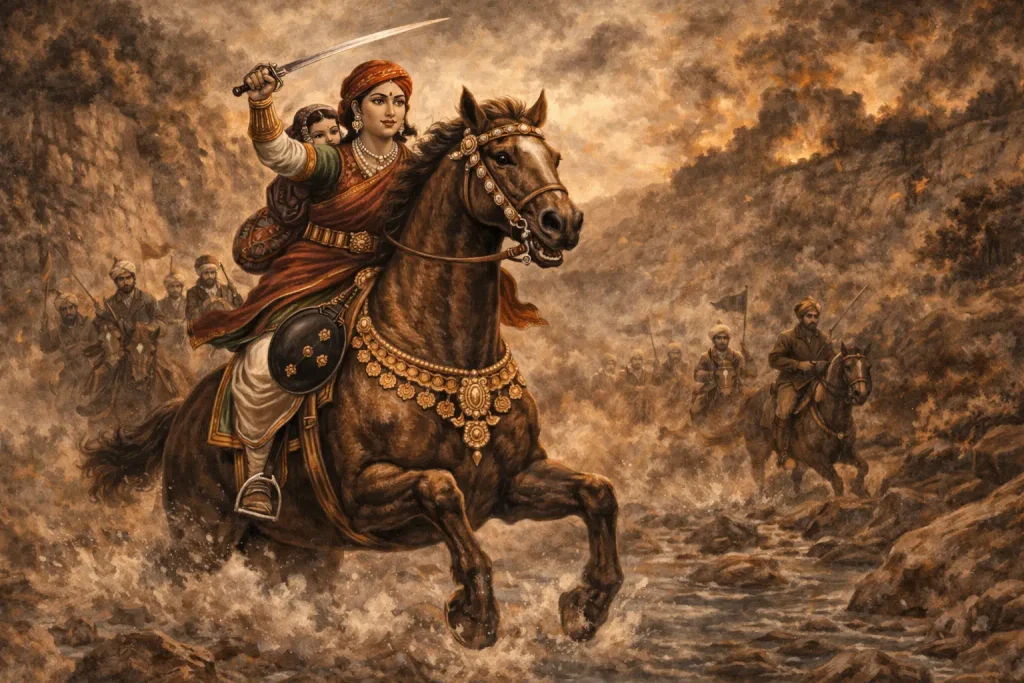
Battle of Gwalior (1858)
Rani Lakshmi Bai, alongside allied forces, planned a meticulous strategy to capture Gwalior from the British. The plan involved dividing forces, securing key fort entrances, and coordinating with local rebels.
Secret alliances with local commanders
Strategic division of troops
Reconnaissance and intelligence gathering
The decisive battle was fought with unmatched valor. Rani Lakshmi Bai led the cavalry personally, breaking enemy lines, and inspiring her soldiers with her courage.
Cavalry-led offensive
Close combat at fort entrances
Tactical retreats and counter-attacks
Rani Lakshmi Bai attained martyrdom on 18 June 1858, defending Gwalior fiercely. Her bravery became a symbol of resistance against colonial rule.