
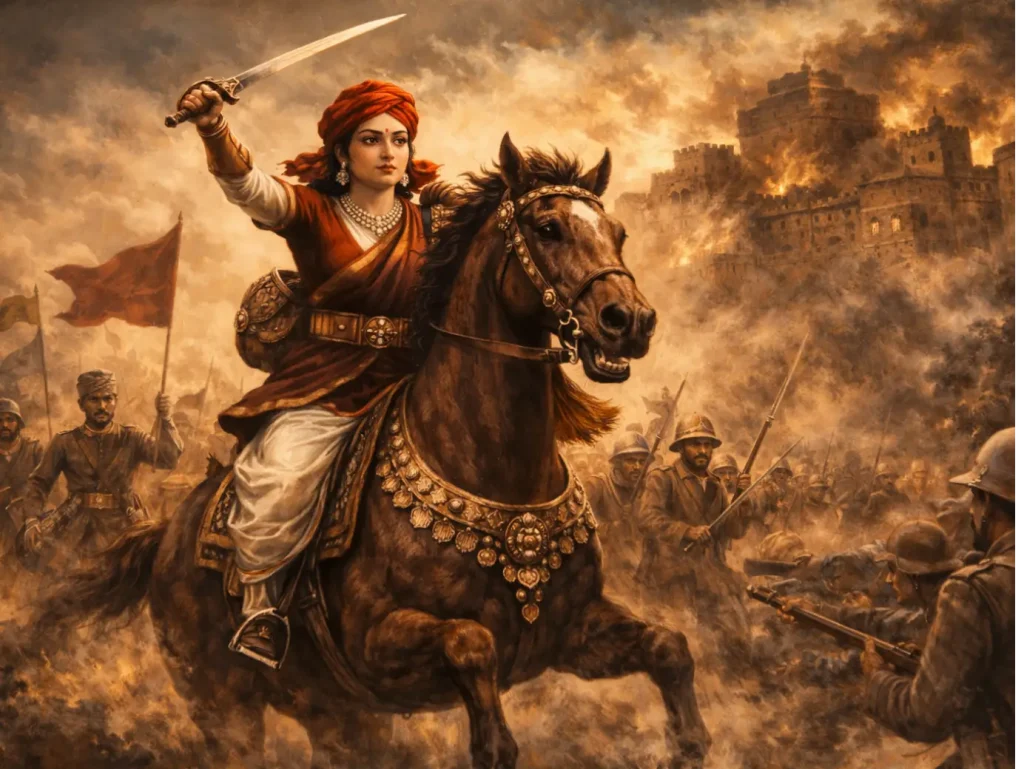
After the death of Jhansi’s Maharaja, the British East India Company invoked the controversial “Doctrine of Lapse.” They refused to recognize the adopted heir of the throne, thereby annexing Jhansi in 1854. This forced Rani Lakshmibai — then a young widow — to lose not just her husband, but the kingdom itself. Encyclopedia Britannica+2vedantu.com+2
Though many might have accepted the loss, Lakshmibai did not. Instead, she boldly asserted her right — and her people’s right — to resist unjust colonial policies. Refusing to accept British-imposed exile or pension, she prepared to defend Jhansi and its legacy. Her refusal marked the beginning of a chapter that would etch her name into Indian history.
This defiance wasn’t just political — it was symbolic. It challenged the idea that colonial power could unilaterally erase Indian sovereignty. And in doing so, it laid the groundwork for broader resistance.